Keynote and Panel - SemDH2025
Keynote
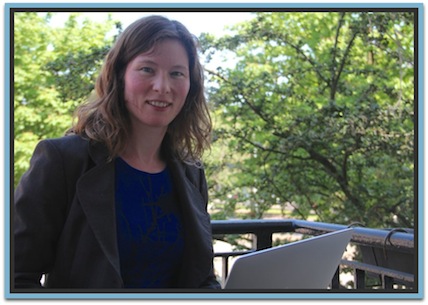
Keynote Speaker Laura Hollink - Cultural Bias in Linked Open Data
Laura Hollink
Human Centered Data Analytics group
Centrum Wiskunde & Informatica
Cultural Bias in Linked Open Data
Cultural heritage collections often reflect the societal values and norms prevalent at the time when objects were created, collected, cataloged, and described. As a result, they may include outdated, stereotypical, or offensive terminology relating to people and cultures. In this presentation, we examine the presence of such contentious language within cultural heritage collections. Our analysis spans multiple layers: the cultural objects themselves, the structured and unstructured metadata used to describe and interlink them, and the controlled vocabularies, thesauri, and knowledge graphs that underpin these systems. Across all levels, we identify significant forms of bias. We will present methods for detecting these biases at scale, and discuss approaches for mitigation. In conclusion, we reflect on what the linked open data community can learn from cultural heritage institutions in confronting and addressing cultural bias in large-scale datasets.
Panel
The panel on ”Cultural Bias in LOD” brought together experts from the fields of Semantic Web and
Digital Humanities. The audience was also considered an integral part of the panel and was
strongly encouraged to participate in the discussion by sharing experiences, asking questions, and
offering insights. At the beginning of the session, the audience was asked to participate in a set of icebreaker questions, which provided valuable context and perspective on the topics at hand. Their responses helped to define the current state of cultural bias awareness and highlighted some key areas for improvement. The responses provided valuable insights into the audience’s awareness and practices regarding cultural bias in LOD. Most of the participants indicated that they had considered cultural bias in their projects and had involved end users during the requirement collection phase. However, responses were more divided when it came to questioning the cultural assumptions in the ontologies and vocabularies used in their projects. Additionally, there was a clear gap in post-project evaluation, with many participants not planning checks to assess how their tools were adopted or the impact they had on the target community. These insights provided valuable context for the core discussion that followed, as the panelists focused on how biases in data representation impact the humanities and how to ensure more inclusive, diverse, and accurate knowledge representation in LOD.
A detailed summary of the panel discussion can be found in the proceedings of SemDH2025.
Panelists
- Laura Hollink, Centrum Wiskunde & Informatica (Netherlands)
- Rossana Damiano, University of Torino (Italy)
- Torsten Schrade, Academy of Sciences and Literature Mainz (Germany)
- Harald Sack, FIZ Karlsruhe and Karlsruhe Institute of Technology (Germany)
- Mrinalini Luthra, Huygens Insitute (Netherlands)
- Amber Zijlma, Huygens Institute (Netherlands)